HealthED Connect programs
HealthEd Connect's Global Scale
Where We Operate
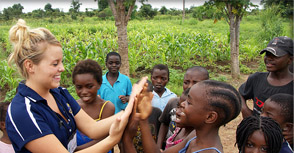
HealthEd Connect is currently operating in 4 countries: Zambia, Malawi, the Democratic Republic of Congo, and Nepal.
The real heroes in each country are the community health workers (CHW). These are village women who typically: :
- Get up at 4:30 in the morning to walk by moonlight to carry water from the river or well.
- Gather and carry large bundles of firewood on their heads.
- Pound or grind cassava or cornmeal for the family’s staple food.
- Cook one-pot meals over an outdoor smoky fire.
- Spend hours each day planting and hoeing in the fields.
- Wash their clothes in the river and lay them on the banks to dry.
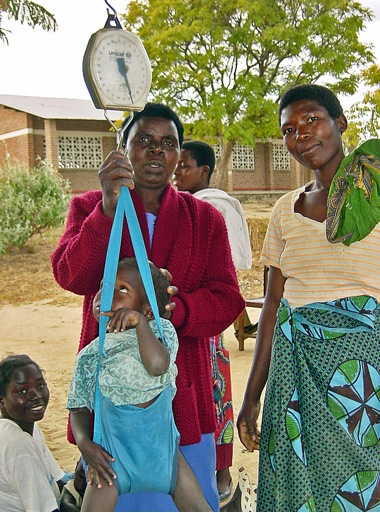
These same women serve also as volunteers who walk long distances – some as far as 20-30 kilometers – to bring health education to remote villages. All with a baby frequently strapped to their backs.
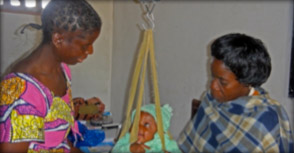
Last year our health workers saw over 30,000 babies and pregnant women. They weighed the babies, monitored their growth, and taught mothers how to prepare life-saving oral rehydration solution (ORS) from sugar/salt/water. Approximately 8,000 babies around the world die everyday from diarrhea. The health workers are saving many of those little lives by teaching the mothers how to prepare ORS. Some have also been trained as traditional birth attendants (TBA’s) and are providing clean, safe deliveries for the first time in many villages.
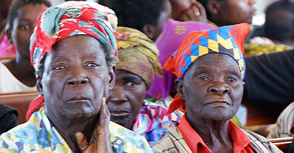
Our work in the suburbs pursues the same mission as our work in the villages: empowering women and children through evidence-based health and education programs. Some health services, however, tend to be available through government programs in more populous areas whereas little or no services are available in villages. In the suburbs the health workers may also serve as a link or connector between the local people and the needed services. One of the emerging roles of health workers has been to provide home-based care for the desperately ill and dying, many of whom have AIDS. While visiting in these homes, the health workers have identified a growing number of orphans and vulnerable children not attending school.
Community surveys have revealed that education is the most urgent need identified by care-givers, many of whom are elderly grandmothers. To meet this need, local community leaders have established community schools with mentoring, encouragement, and support from HealthEd Connect.
HealthEd Connect Statistics
Zambia
2 Schools Supported
14 CHW volunteers
330
Children Enrolled
Malawi
9 Villages served
13 CHW volunteers
28,353
Babies monitored
Nepal
9 Villages Served
15 Hope for the Himalaya CHW's
801 People Monitored
Democratic Republic of the Congo
6 Villages served
20 Traditional Birth Attendants
Many!
Babies Delivered
Facts:*
Life expectancy in Zambia is 42
43% of adults in Nepal are illiterate
1,200,000 people in Zambia have AIDS
900,000 Zambian children are orphans
161 (per 1000) DRC children die before age 5
*UNICEF, State of the World’s Children 2009, Basic Indicators, Table 1.
contact us
We'd love to hear from you! Please contact us by any of the following ways:
Email: info@healthedconnect.org
Phone: 816.833.0524 Ext 4115
Address: 1401 West Truman Road
Independence, MO 64050
United States of America